Important Safety Information for Compounded GLP-1
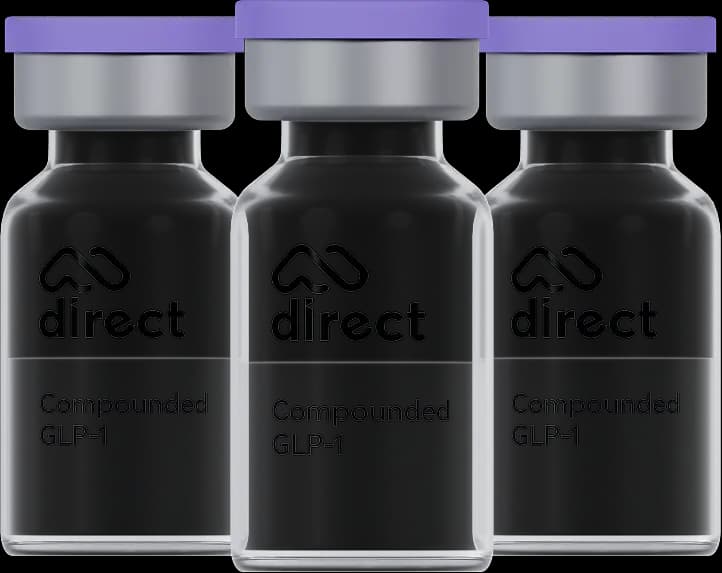
Unlike GLP-1, compounded GLP-1 is not FDA-approved, but it can be prescribed under federal law. Medical providers such as MD Direct, can recommend certain compounded GLP-1 dosages to patients, based on their medical condition and weight loss goals.
Thyroid C-Cell Tumor Risks
- There have been studies done on mice and rats, where test subjects developed thyroid tumors. We haven't had such cases in human patients, so we don't know if GLP-1 causes tumors in humans. If you notice localized swelling, hoarseness, trouble swallowing or a lump, contact your medical provider immediately.
- If you have a history of thyroid tumors running in your family (or if anyone in your family ever had a thyroid tumor), you should not use GLP-1 in any form. Also, if you have Multiple Endocrine Neoplasia syndrome Type 2 (MEN 2) condition, you should not be taking GLP-1.
What is GLP-1?
GLP-1 is a glucagon-like peptide-1 (GLP-1) receptor agonist which mimics the action of naturally occurring GLP-1 hormone within the body regulating:
- Blood sugar secretion
- Glucagon release
- Gastric emptying and
- Appetite
GLP-1 (as well as its compounded variant) is prescribed to patients seeking to lose weight, who have an initial body mass index (BMI) of
- 30 or greater - these patients are considered obese or
- 27 or greater - these are patients who are overweight, and also suffer from a metabolic, weight-related condition such as Type 2 diabetes, hypertension etc
Avoid using GLP-1 if:
- You are currently using another GLP-1-containing product (or GLP-1 receptor agonist)
- You have a history of pancreatitis
- You have Type 1 diabetes
- You, or anyone in you family, has suffered from thyroid cancer/tumor
- You have an endocrine condition called Multiple Endocrine Neoplasia syndrome Type 2
- You have an allergic reaction to GLP-1
How To Administer Compounded GLP-1
A positive trait about compounded GLP-1 is that it can be self-administered as a subcutaneous injection in your stomach, thigh or upper arm. We provide detailed instructions to all our patients, but feel free to reach out if you are not 100 percent sure.
While administering the medication, you should not change the dosage as it may disrupt your progress and even cause unwanted side effects.
What To Tell MD Direct Medical Providers
If you are looking to start your compounded GLP-1 weight loss journey with MD Direct, please provide details on medications previously and currently used.
GLP-1 might interfere with some medications you are currently taking, so please make us aware of medications you are taking to enable our medical professionals to plan the best course of action.
Some of these medications are:
- Those used to treat Type 1 or Type 2 diabetes
- Medication in the same drug class such as Ozempic, Wegovy, Saxenda, Victoza etc.
- Dietary or weight loss supplements
*Because compounded GLP-1 delays gastric emptying and absorption, it may disrupt the absorption of some orally taken medication. So, even if you are allowed to take these with compounded GLP-1, you might experience a delay in their desired action due to their prolonged absorption.
Is Compounded GLP-1 Offered in My State?
MD Direct's compounded GLP-1 is offered and available in 41 states, excluding Alabama, Alaska, Arkansas, California, Hawaii, Louisiana, Mississippi, Virginia and the District of Columbia.
Medical History
Please share detailed medical history and current prescriptions with our providers. Medical information should include:
- Diabetes (type 1 and 2)
- Thyroid cancer/tumor
- Pancreatitis
- Kidney diseases
- Depression
- Ileus etc
Pregnancy
- If you are planning to get pregnant - Because the drug remains in your bloodstream even after you stop taking it, if you are planning on becoming pregnant, you should stop using it at least 2 months prior to pregnancy. This goes for both men and women.
- If you are pregnant - GLP-1 should not be used in pregnancy. Some studies suggest that taking GLP-1 could pose a potential risk to the unborn baby. Also, because there is no weight loss benefit in pregnancy, we recommend that you do not use GLP-1.
- If you are breastfeeding - studies suggest that GLP-1 was found in the milk of lactating rats, which is why we advise our patients not to take it during breastfeeding. If you want to discuss this issue further, please contact our providers at MD Direct.
Common Side Effects of Taking Compounded GLP-1
Common side effects people experience while taking compounded GLP-1:
- Nausea
- Headache
- Dizziness
- Diarrhea
- Vomiting
- Constipation
- Abdominal pain
- Fatigue
- Flatulence
- Gastric problems etc
Serious Side Effects
In some rare cases, patients might experience more severe side effects. If you experience any of the following conditions, please seek immediate medical attention:
- Thyroid tumors/cancers - research studies on rats showed an increased likelihood of thyroid cancer appearance. We don’t have many studies confirming these findings in humans, but our recommendation remains that patients with a family history of thyroid cancer should not be taking compounded GLP-1.
- Acute pancreatitis - acute pancreas inflammation sometimes occurs in patients. It is characterized by long-term abdominal pain which sometimes radiates to the back and may be followed by vomiting.
- Acute gallbladder disease - GLP-1 may sometimes cause acute gallbladder problems, even followed by the appearance of stones. The disease is characterized by upper stomach pain, fever, clay-colored stool and yellowish skin or eyes.
- Acute kidney problems - kidney problems are particularly challenging since they lead to diarrhea, nausea and vomiting, exacerbating dehydration and worsening the patient's overall condition.
- Low blood sugar - one of GLP-1's main actions is to lower blood sugar levels. This is why you need to be constantly monitoring it, making sure it's within the healthy limits.
- Allergic reactions - if you are allergic to GLP-1 but unaware of it, you can identify the allergy yourself by monitoring for common symptoms such as swelling of your face, throat or tongue, severe rash or itching, increased heart rate, etc.
- Heart rate problems - you might notice an increase in resting heart rate, in which case you should speak to your medical provider.